Mount Manaslu Expedition: Complete Guide to Route, Preparation & Climbing Nepal’s Mountain of the Spirit
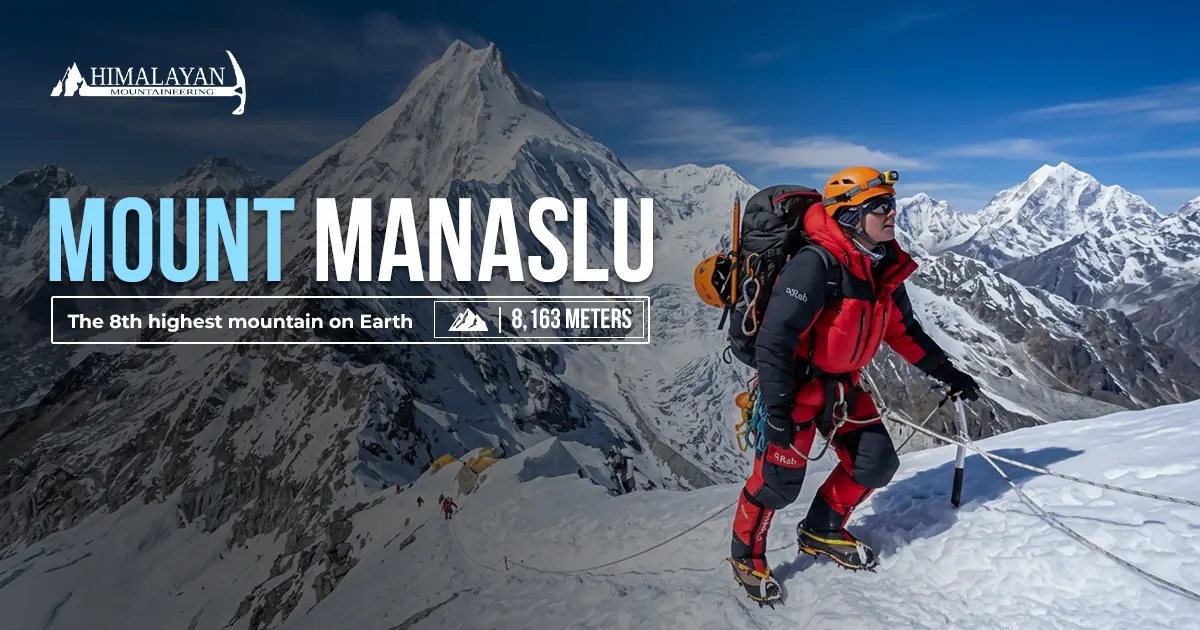
A Mount Manaslu Expedition is amongst the most fulfilling high altitude mountaineering adventures in Nepal. Standing tall at 8,163 meters (26,781 feet), Mount Manaslu presents an adventurous mountaineering experience consisting of extreme elevation, glacial navigation, technical rock climbing and a peaceful mountaineering environment compared to many other Himalayan mountains.
Being dubbed “the Mountain of the Spirit,” Manaslu not only offers a chance to reach the top but an opportunity for true expedition experience in some of the toughest conditions the planet has to offer.
Understanding the Mount Manaslu Expedition
A guided Mount Manaslu Expedition is a fully organized mountaineering expedition which will help climbers ascend the mountain from low altitude levels up to the peak through acclimatization and expedition planning.
Mount Manaslu located in the remote Gorkha area of Nepal on the border with Tibet is increasingly becoming popular among mountaineers who wish to undertake a proper Himalayan adventure without having too many people around.
The most common way for mountaineers to climb Mount Manaslu is by taking the Northeast Face route.
A normal expedition lasts about 34 days and comprises:
· Arrival and expedition preparation in Kathmandu
· Travel to the Manaslu region
· Trek to Base Camp
· Technical climbing preparation
· Acclimatization rotations
· Summit push
· Return journey to Kathmandu
This expedition approach improves adaptation to altitude while maximizing both safety and summit opportunity.
Why Climb Mount Manaslu?
Mount Manaslu is still attracting climbers worldwide due to its unique combination of altitude and classic expedition climbing.
Different from mountains that may have too much traffic to spoil the whole experience, the appeal of Manaslu is not marred by excessive noise.
Key attractions of climbing Mount Manaslu:
- Summit height: 8,163m (26,781 ft.)
- One of the world’s fourteen 8,000-meter peaks
- Remote and less crowded climbing environment
- True expedition-style mountaineering
- Technical but achievable progression for qualified climbers
- Exceptional glacier and Himalayan views
For many mountaineers, climbing Manaslu becomes not only a physical challenge but also a deeply rewarding personal achievement.
Challenges of the Mount Manaslu Expedition
Although often considered one of the more accessible 8,000-meter peaks, Mount Manaslu remains a serious high-altitude objective.
1. Extreme Altitude
Above 8,000 meters, oxygen levels decrease significantly and every movement becomes physically demanding.
Proper acclimatization and disciplined climbing become essential for safe progression.
2. Harsh Mountain Weather
Weather conditions on Manaslu can change quickly.
Snowfall, wind, low temperatures, and limited summit windows require patience and flexibility throughout the expedition.
3. Physical and Mental Endurance
Success depends on more than physical strength.
Weeks of acclimatization, repeated camp rotations, and prolonged exposure to difficult mountain conditions require resilience, consistency, and mental discipline.
Mount Manaslu Expedition Route Explained
The Mount Manaslu Expedition follows the standard Northeast Face route from Nepal and combines trekking, glacier travel, acclimatization rotations, technical climbing sections, and a final summit ascent to 8,163 meters.
Unlike alpine-style climbs, Manaslu follows a structured expedition strategy where climbers gradually move through higher camps before making their summit attempt.
1. Manaslu Base Camp (4,700m)
After travelling through the remote Manaslu region, climbers arrive at Manaslu Base Camp at approximately 4,700 meters.
Base Camp serves as the operational center for:
· Preparation for the expedition
· Technical training
· Acclimatization
· Monitoring of the weather conditions
· Summiting planning
2. Camp I (Approx. 5,700m)
The route above Base Camp introduces glacier travel and increasingly steep snow terrain.
This stage allows climbers to adapt to altitude while practicing movement on fixed ropes.
Key challenges:
· Glacier crossings
· Snow climbing
· Fixed rope movement
· Managing energy at altitude
3. Camp II (Approx. 6,400m)
Camp II marks the transition into more sustained high-altitude climbing.
Climbers spend longer periods moving through steeper snow sections while continuing acclimatization.
4. Camp III (Approx. 6,800m)
Above Camp III, oxygen availability decreases significantly.
This stage often includes repeated rotations before committing to summit preparations.
5. Camp IV (Approx. 7,400m)
Camp IV becomes the final high camp and launching point for summit day.
At this elevation, recovery, hydration, weather timing, and oxygen management become critical.
6. Summit Push – Mount Manaslu (8,163m)
After favorable weather conditions are confirmed, climbers begin the final ascent supported by climbing Sherpas and high-camp logistics.
Reaching the summit of Mount Manaslu rewards climbers with extraordinary views across the Nepal Himalayas and toward Tibet.
The summit represents weeks of preparation, acclimatization, teamwork, and disciplined decision-making.
Best Time for Mount Manaslu Expedition
Choosing the right season significantly affects both safety and summit opportunity.
1. Autumn (September–October)
Autumn is widely considered the preferred season for climbing Mount Manaslu.
Advantages include:
· Stable post-monsoon weather
· Clear mountain views
· Better climbing conditions
· Improved summit opportunities
2. Spring (April–May)
Spring also provides favorable climbing windows with relatively stable conditions and moderate temperatures.
Many climbers still prefer autumn due to overall mountain conditions.
Preparing for Mount Manaslu
Preparation should begin several months before departure.
1. Physical Training
Training should focus on:
- Cardiovascular endurance
- Hiking with load
- Stair climbing
- Leg and core strength
- Long-duration mountain movement
2. Previous Climbing Experience
Experience above 6,000 meters is strongly recommended before attempting Manaslu.
Previous Himalayan climbing experience improves both confidence and adaptation.
3. Mental Preparation
High-altitude mountaineering requires patience, flexibility, and the ability to remain focused under changing mountain conditions.
Cost of Mount Manaslu Expedition
One of the most common questions climbers ask is:
How much does a Mount Manaslu Expedition cost?
Final costs vary depending on:
- Climbing permits
- Personal climbing Sherpa support
- Supplemental oxygen systems
- Accommodation level
- Transportation logistics
- Base Camp facilities
- Expedition management services
Different expedition categories are often available to match different goals and comfort levels.
The Role of Sherpas During a Guided Manaslu Expedition
Professional climbing Sherpas play an essential role throughout the expedition.
Their responsibilities include:
- Route preparation
- Rope fixing
- Camp establishment
- Equipment transportation
- Weather coordination
- Safety monitoring
- Emergency support
Their experience contributes significantly to both safety and operational efficiency.
Acclimatization and Summits
Acclimatization continues to be one of the most critical aspects of successful high-altitude mountaineering.
It is the common practice of expeditions to use the approach of going up and then coming down for recovery before attempting the summit.
Through this method, one is able to adapt his/her body slowly to the altitude as well as minimizing dangers that may be associated with altitude.
Factors that Influence Successful Summits
Mount Manaslu: Why Go With Himalayan Mountaineering?
Our Mount Manaslu Expedition is designed to provide:
- Dedicated climbing Sherpa support
- Structured acclimatization planning
- Premium Base Camp services
- Supplemental oxygen systems
- Professional expedition logistics
- Daily weather monitoring
- Safety-focused expedition management
Our goal is not simply reaching the summit—it is delivering a professionally managed and memorable Himalayan expedition experience.
Conclusion
Manaslu is not just one of the fourteen mountains in the world that exceeds the height of 8,000 meters – this is a true expedition that tests your physical stamina, mental fortitude, and adaptation in one of the harshest conditions in the world.
If your aim is to climb the top of the outstanding mountain, get experience in high altitude climbing, or undertake a challenging climb in the Himalayas, then you need to be part of the Mount Manaslu Expedition.
For the adventurers prepared to take their limits to the edge and have once in a lifetime experience of climbing a peak in the world, then there is no better opportunity than the Mount Manaslu Expedition.
Here at Himalayan Mountaineering, we provide professional management of the expeditions, proper acclimatization, technical support, and logistics to make climbers enjoy the Mount Manaslu experience with confidence and security.