Loading
Preparing your Himalayan journey
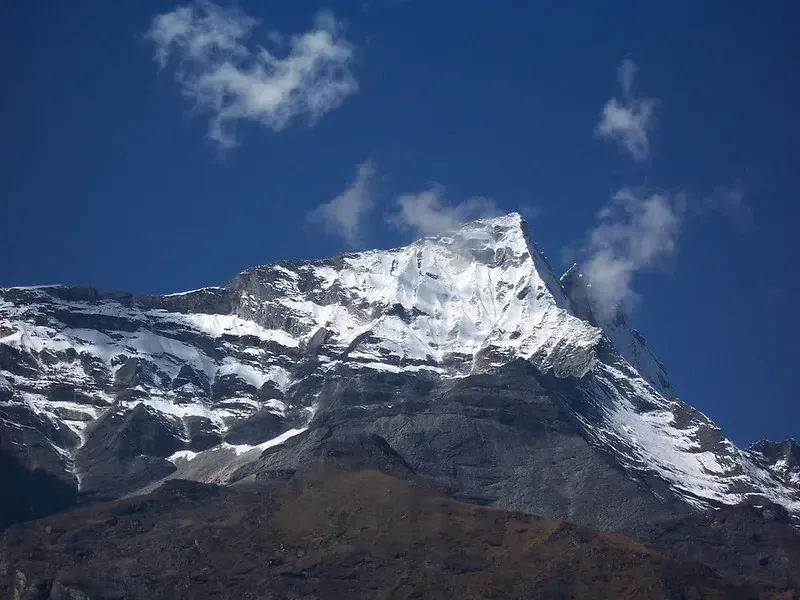
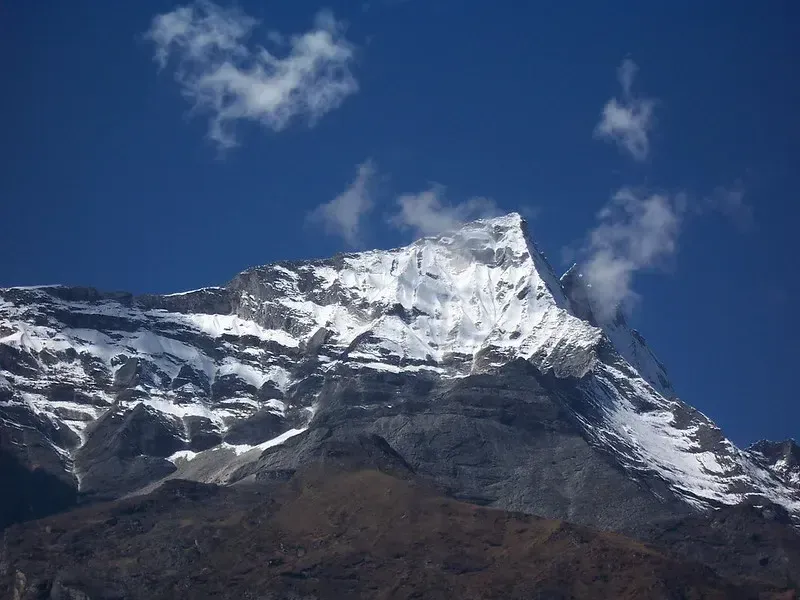
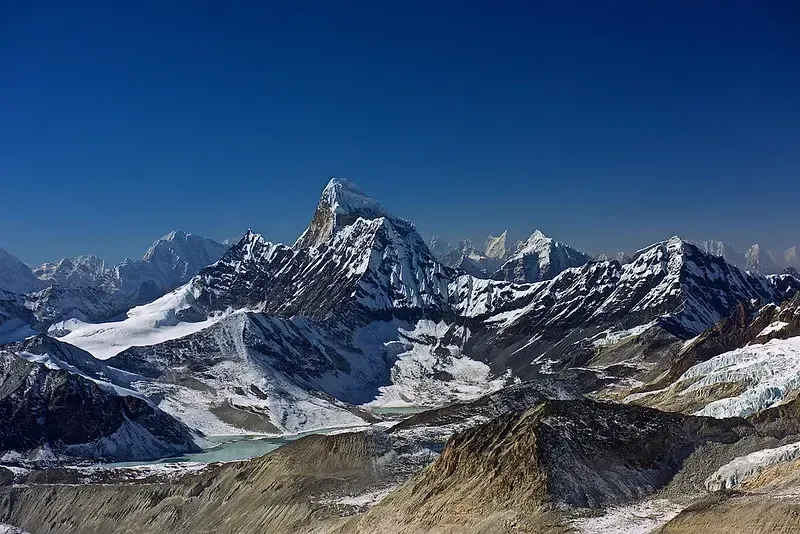
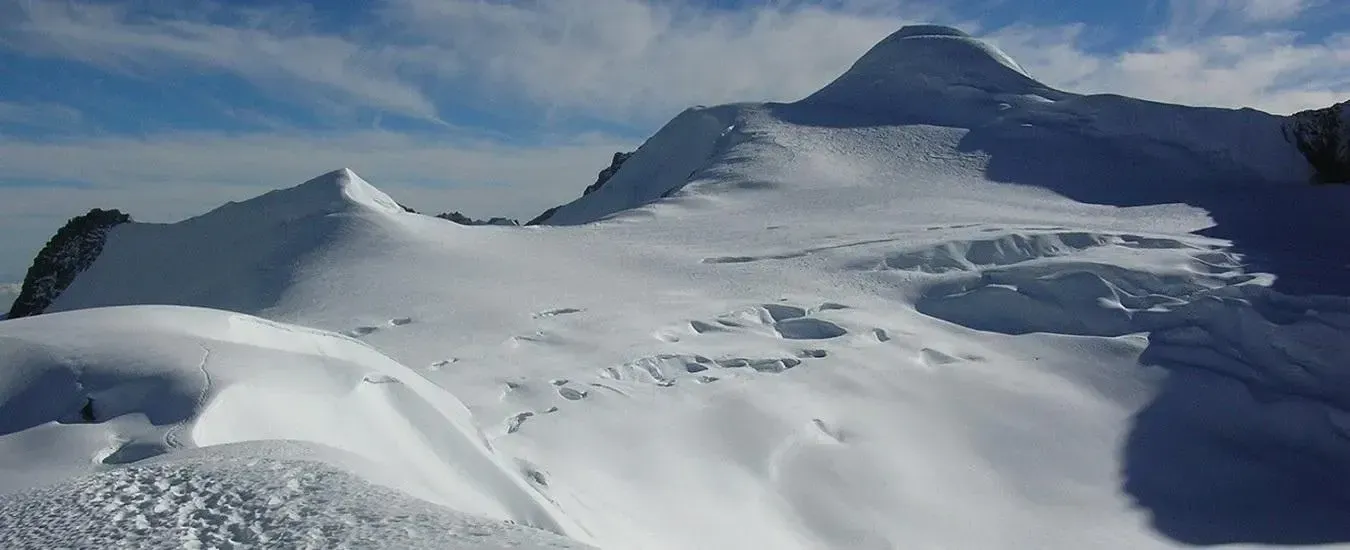
Dolma Khang Peak with Ramdung
Ramdung Go and Dolma Khang Peak Climbing is a 21-day, fully supported expedition to two 6,000m summits in Nepal's remote Rolwaling Valley, led by Himalayan Mountaineering Expedition. Climbers fly into Kathmandu, drive to Chetchet and trek through Simigaon, Dongang, and Beding to Na Village, acclimatize with a visit to Tsho Rolpa Lake, summit Ramdung Go (5,925m) from a high camp above Na, return to Beding, then climb to Dolma Khang Base Camp for a multi-day summit push on Dolma Khang (6,332m), before retracing the route back through Simigaon and Chetchet to Kathmandu.
Dolma Khang Peak with Ramdung
Difficulty
6/10
A demanding high-altitude expedition combining glacier travel, snow climbing, technical rope work, and two summit attempts above 6,000m. Dolma Khang's steeper upper slopes and exposed summit ridge, combined with the remote Rolwaling terrain, make this a serious objective for experienced and well-prepared climbers.
Activity
Twin Peak Climbing
The adventure combines high-altitude trekking, glacier travel, and technical climbing in one of Nepal’s least-visited Himalayan regions, with ascents of Ramdung Go (5,925m) and Dolma Khang (6,332m) through the remote and spectacular Rolwaling Valley.
Best Season
Spring - Autumn
March to May and September to November offer the most favorable conditions for Ramdung Go and Dolma Khang climbing, with generally stable weather, clear mountain views, and suitable snow conditions for high-altitude climbing.
Max Elevation
0 meters (Dolma Khang)
The expedition reaches a maximum altitude of 6,332 metres (20,774 ft) at the summit of Dolma Khang, with Ramdung Go reaching 5,925 metres (19,439 ft).
Location
Nepal
Rolwaling Valley Dolma Khang: 27.9372° N, 86.3503° E Ramdung Go: 27.8188° N, 86.4311° E
Transportation
Private 4X4
Private jeep transportation is provided between Kathmandu and Chetchet, covering the road section of the expedition. The trek begins from Chetchet to Simigaon and continues into the Rolwaling Valley, with the same road journey used for the return to Kathmandu.
Duration
0 Days
A 21-day fully supported expedition combining the approach trek through the Rolwaling Valley, acclimatization, ascents of Ramdung Go and Dolma Khang, and return to Kathmandu.
Group Size
2-15
Ramdung Go and Dolma Khang Peak Climbing is designed for solo climbers as well as organized groups of up to 15 members. We provide one climbing guide per client, supported by a dedicated trekking guide and an experienced Sherpa team, with Sherpa support scaled according to the size of each expedition.
Accommodation
Hotel - Lodge - Tent
Accommodation throughout the expedition includes 4-star hotel accommodation in Kathmandu, comfortable teahouses during the Rolwaling Valley trek, and fully equipped expedition tents during the high-altitude climbing period.
Price
$0
The cost of the Ramdung Go and Dolma Khang expedition depends on the level of climbing support and services selected. Each package is designed to provide comprehensive logistics, accommodation, meals, permits, professional guides, Sherpa support, and essential high-altitude expedition services.
Food
Breakfast - Lunch - Dinner
The expedition provides three meals daily—breakfast, lunch, and dinner—prepared to meet the nutritional demands of high-altitude climbing. Tea, coffee, and filtered drinking water are provided throughout the trekking and climbing sections.
Overview
The Rolwaling Valley is one of the least developed trekking regions in Nepal, despite sitting only a few days' drive and trek from Kathmandu. More than twenty peaks above 6,000 metres rise from the valley, yet the Nepal Mountaineering Association classifies only three as official trekking peaks: Ramdung, Cheki Go, and Pharchamo. Everything else in the valley falls under the Department of Tourism's expedition peak category, which keeps visitor numbers low and the valley genuinely wild.
Beding (3,690m) and Na (4,200m) are the last two permanent Sherpa villages before the high glaciers, and both retain a way of life and architecture that has changed little over generations. Along the trek, the valley's dense lower forests of pine, hemlock, and rhododendron are home to red panda, musk deer, and snow leopard, a level of biodiversity rarely encountered so directly on a Himalayan climbing itinerary.
Ramdung Go (5,925m) sits south of Na village, part of a cluster of peaks surrounding the Yalung La pass that provides access to the upper Rolwaling from the south. The mountain was first explored and climbed in 1952 by the Scottish Himalayan Expedition led by Bill Murray, the same trip that made the first ascents of neighbouring Yalung Ri and Chhugyima Go, and a second ascent followed in 1955 by members of the Merseyside Expedition.
The standard route follows the north-east flank of the mountain via glacier travel and moderate snow slopes, technically straightforward by Himalayan standards, though the remoteness of the approach and the altitude of High Camp at 5,650 metres still demand a properly acclimatized and well-prepared team. From the summit, climbers are rewarded with a sweeping panorama stretching from Langtang to Everest, along with close views of Gauri Shankar and Melungtse.
Dolma Khang (6,332m), also spelled Dolma Kang and formerly known as Tseringma, lies between Gaurishankar (7,134m) and Beding Go (6,125m) and is considered one of the most accessible 6,000-metre summits in Nepal, climbable in as little as 12 to 14 days by an already-acclimatized team. For much of its climbing history, Dolma Khang was not an objective in its own right: expeditions in 1980, 1984, and 1995 climbed it primarily as a stepping stone en route to the far more difficult south-east ridge of Gaurishankar itself.
The mountain's first genuine ascent came from an Australian expedition led by Patrick Cullinan in April 1980, which reached the summit before retreating, followed later that same year by a Japanese team that completed the climb and continued along the ridge toward Gaurishankar. Dolma Khang remains lightly climbed today, with official records showing only a handful of expeditions across more than four decades, which is part of what makes summiting it a genuinely distinctive achievement rather than a routine tick on a busy trekking peak circuit.
From Beding, the route to Ramdung Go continues to Na village, the last settlement in the valley, before climbing to a high camp at 5,650 metres for the summit push. After the descent back to Beding, the route to Dolma Khang Base Camp turns south-west, climbing roughly four hours to a camp at 4,193 metres beneath the mountain's lower slopes, from where the multi-day climbing period to the 6,332-metre summit begins.
Ramdung Go's standard route is a relatively straightforward glacier and snow-slope ascent, making it a sensible first objective on this itinerary and a confidence-building climb before the more demanding terrain of Dolma Khang. Dolma Khang's ascent is steeper, involving a roped climb across open snow slopes to an airy summit ridge, and our itinerary includes a dedicated day within the climbing period for the Sherpa team to fix rope on the upper mountain ahead of the summit attempt.
Hiking Dolma Khang and Ramdung Go are the most ideal combination of adventure hiking and high-altitude climbing. These mountains are particularly appropriate to mountaineers aiming to have a feel of Himalayan conditions before trying other major climbing expeditions such as an Everest one.
The highlights of some include:
Despite the fact that these peaks can be viewed as beginner-friendly, it is necessary to prepare properly. Climbers should focus on:
Peak training on mountain tops such as Dolma Khang and Ramdung Go will enable the climbers to attain confidence and experience to venture into a complete expedition to Everest.
The Dolma Khang Peak and Ramdung Go peak are two outstanding climbing sites in Nepal in the little known Dolwaling Valley. They provide an unmatched combination of adventure and natural beauty and experience in mountaineering. These peaks are the right starting point to those climbers who would like to venture into the realm of Himalayan climbing or who may be planning to go to Everest in the future.
Explore our journey on Instagram, Facebook & TikTok for photos, videos, and stories
Would you like to ask us in email info@himalayanmountaineering.com.
Itinerary
Outline Itinerary
Day 01:
Arrival in Kathmandu and meet with our representative at the airport and transfer to Hotel. Welcome drink and short briefing about Ramdung and Dolma Khang Peak.
Overnight in Hotel - 1400 meter
Day 02:
Drive to Chetchet for 5 hours and hike to Simi gaun 1.5 hours
Overnight in Lodge – 2000 meters
Day 03:
Trek to Dongang which will take around 5 hours.
Overnight in Lodge – 2790 meters
Day 04:
Trek to Beding for another 4 hours.
Overnight in Lodge – 3690 meters
Day 05:
Trek to Naa Village which will be our last lodge accommodation and last village as well.
Overnight in Lodge - 4200 meters
Day 06:
Acclimatize in Na and visit Tshrolpa Lake which is the biggest glacier lake in the world situated at 4580 meters and back to Naa village.
Overnight in Lodge – 4200 meters
Day 7:
Trek to Ramdung high camp which will take around 6 hours for us to reach there.
Overnight in Tent - 5650 meters
Day 08-09:
We can summit and back but 2 days are kept here for exploration of the mountain, touring, bad weather or can be done in 1 day.
Overnight in Tent – 5650 meters
Day 10:
Trek back to Beding village.
Overnight in Lodge – 3690 meters
Day 11:
Trek to Dolma Khang Base Camp which will be around 4 hours from Beding. We will rest in Base Camp and plan for future climbing.
Overnight in Tent - 4193 meters
Day 12-16:
These 4 days will be the climbing period of Dolma Khang. Typically we should climb within 2 days. But we keep extra day for reserve. We will also do rope fixing which will take one more day.
Overnight in Tent – 6332 meters
Day 17:
Trek to Dongang following the same route we camp.
Overnight in Lodge – 2800 meters
Day 18:
Trek down to Simigaon same route following thorough the river.
Day 19:
Trek back to Chetchet for one hour and drive to Kathmandu 5 Hours.
Overnight in Hotel - 1400 meters
Day 20:
Rest day and Exploration of Kathmandu city.
Overnight in Hotel - 1400 meters
Day 21:
Final departure after Breakfast
Gear List
Climbing two separate 6,000m peaks in a remote valley with limited resupply options demands a complete, reliable kit. The checklist below covers the essential personal gear and clothing for Ramdung Go and Dolma Khang Peak Climbing. Our Kathmandu-based guides review every climber's kit before departure and can help arrange rental equipment for hard-to-source technical items.
Note: Tents, group climbing equipment, kitchen equipment, and communication devices are provided by Himalayan Mountaineering Expedition as part of the package and do not need to be carried by climbers.
The Team
Our expedition will be led by experienced Ningma Dorje Tamang who has a big history of climbing the big mountains with an experience of 15 years. Ningma Dorje Tamang is the Co-Founder and Director of Himalayan Mountaineering Expedition with over 15 years of mountaineering experience. He has guided and climbed major peaks including Everest, K2, Annapurna I, and Nanga Parbat. Known for his technical skills, leadership, and endurance, he is a highly respected high-altitude guide in Nepal. There will be other sherpa working under him for each members. There will also be a base camp who will take care of foods, accommodation and hygiene. There will also be team in Kathmandu who will work on weather update, helicopter arrangements and other necessary things.
Packages
Twin Peak Climbing Package
$ 3,500
The Ramdung Go and Dolma Khang Peak Climbing package by Himalayan Mountaineering Expedition is designed to deliver a professionally managed, well-supported climb of two remote Rolwaling summits from the moment you land in Kathmandu to your final departure. The table below sets out exactly what is included in the package and what climbers should plan for separately. As this is a custom-quoted expedition, contact us for current pricing based on your group size and dates.
1. All airport and hotel transfer domestic and international.
2. 3 nights' accommodation at 4-star hotel with breakfast.
3. Private Jeep to Chetchet from Kathmandu and Back.
4. Kathmandu city sightseeing tour as per the above itinerary and entrance fees.
5. Meals (breakfast, lunch and dinner) with Tea & coffee and hot/cold filter water during the trek, base camp and all other places than Kathmandu.
6. Lodge during trek and tented accommodation during climbing period on sharing basis. We will have a well settled base camp service.
7. One climbing guide for one person and trekking guide during the trek.
8. Cook, helper, porters and their food & accommodation, salary, equipment’s & insurance for high camp services.
9. Camping Equipment’s, Tents, Kitchen Utensils and Mattresses with high foods.
10. 1 Duffle Bag, Radio Set, Satellite Phone, Map, Weather Report in High Camp for charging mobile, laptop etc.
11. Climbing permit of Ramdung and Dolma Khang Peak, National park fees, Rural Municipality Fees.
12. Waste, members stool and garbage management fees and all necessary permits.
13. Training of using gears, rope and other important knowledge and sharing experience of the expedition.
14. First Aid Medical Kit box, frequent medical checkup and necessary emergency equipment’s.
15. Office Service charge and Certificates.
Twin Peak Climbing Package
$ 3,500
The Ramdung Go and Dolma Khang Peak Climbing package by Himalayan Mountaineering Expedition is designed to deliver a professionally managed, well-supported climb of two remote Rolwaling summits from the moment you land in Kathmandu to your final departure. The table below sets out exactly what is included in the package and what climbers should plan for separately. As this is a custom-quoted expedition, contact us for current pricing based on your group size and dates.
1. All airport and hotel transfer domestic and international.
2. 3 nights' accommodation at 4-star hotel with breakfast.
3. Private Jeep to Chetchet from Kathmandu and Back.
4. Kathmandu city sightseeing tour as per the above itinerary and entrance fees.
5. Meals (breakfast, lunch and dinner) with Tea & coffee and hot/cold filter water during the trek, base camp and all other places than Kathmandu.
6. Lodge during trek and tented accommodation during climbing period on sharing basis. We will have a well settled base camp service.
7. One climbing guide for one person and trekking guide during the trek.
8. Cook, helper, porters and their food & accommodation, salary, equipment’s & insurance for high camp services.
9. Camping Equipment’s, Tents, Kitchen Utensils and Mattresses with high foods.
10. 1 Duffle Bag, Radio Set, Satellite Phone, Map, Weather Report in High Camp for charging mobile, laptop etc.
11. Climbing permit of Ramdung and Dolma Khang Peak, National park fees, Rural Municipality Fees.
12. Waste, members stool and garbage management fees and all necessary permits.
13. Training of using gears, rope and other important knowledge and sharing experience of the expedition.
14. First Aid Medical Kit box, frequent medical checkup and necessary emergency equipment’s.
15. Office Service charge and Certificates.
Booking
Official Booking Confirmation is made only after 20% deposit of the total amount of the Expedition. Please contact us through email or inquiry form so that we can talk and confirm our booking.
FAQ
Combining these two summits creates a progressive Himalayan climbing objective in the remote Rolwaling Valley. Ramdung Go provides an initial high-altitude summit experience before climbers move toward the steeper and more technical terrain of Dolma Khang.
Ramdung Go involves glacier travel and moderate snow climbing, while Dolma Khang presents steeper snow slopes, fixed-rope sections, and an exposed summit ridge. Climbers should therefore have appropriate mountaineering skills and be prepared for changing high-altitude conditions.
The expedition combines a demanding approach through the isolated Rolwaling Valley with two independent 6,000m climbing objectives. Remote terrain, limited mountain infrastructure, glacier travel, high camps, technical climbing, and consecutive summit attempts make it a serious Himalayan mountaineering experience.
Previous experience at high altitude is strongly recommended, particularly because the itinerary involves two summits above 5,900m. Climbers with solid mountaineering fundamentals and appropriate physical preparation may be considered, subject to assessment by the expedition team.
Gallery
Trip Inquiry
Search another peak or departure, or send your questions, preferred dates, group size, and expedition requirements — our team will get back to you.
Not sure which peak? Browse all expeditions or send us a message and we'll recommend one.