Loading
Preparing your Himalayan journey
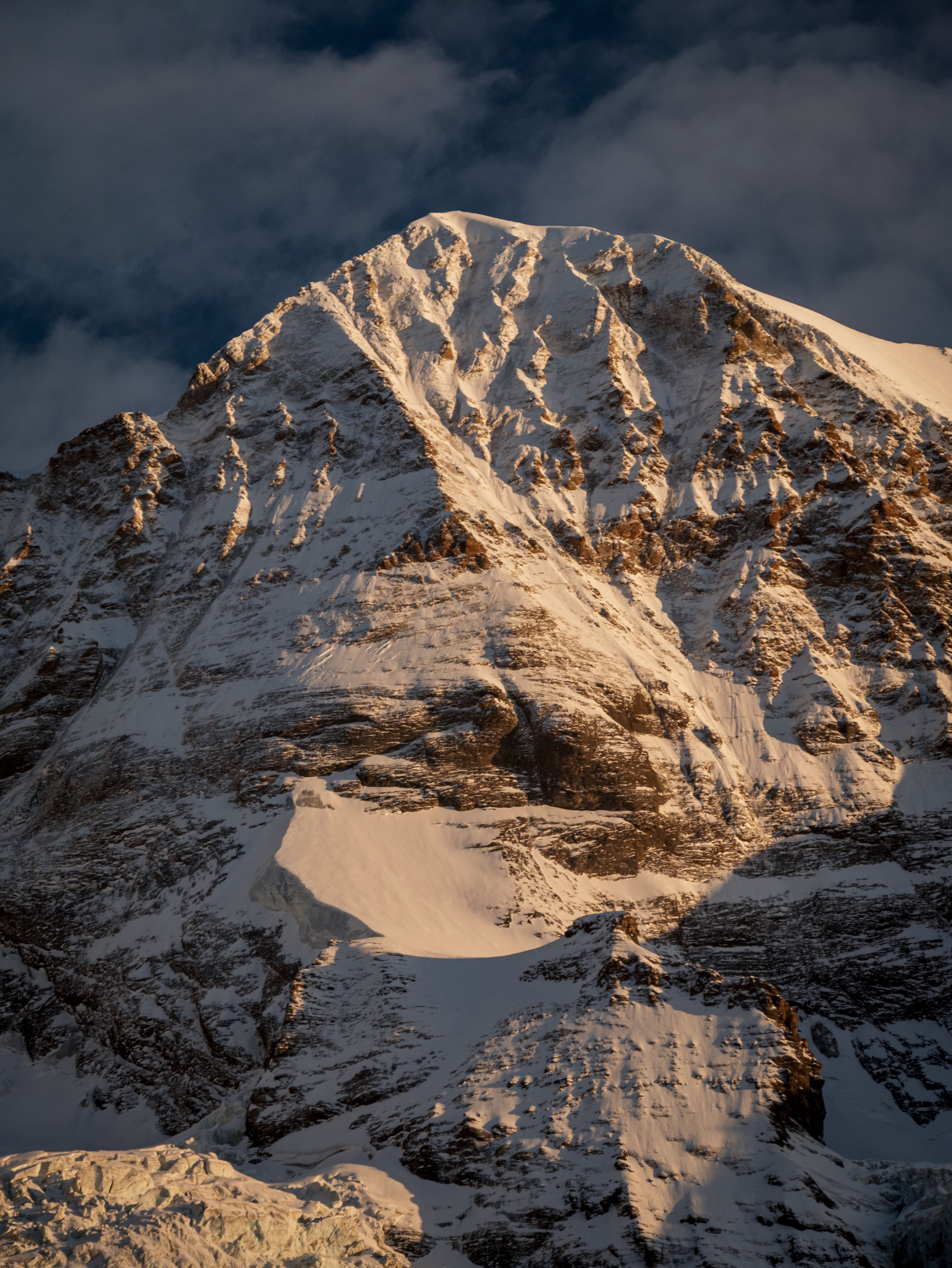
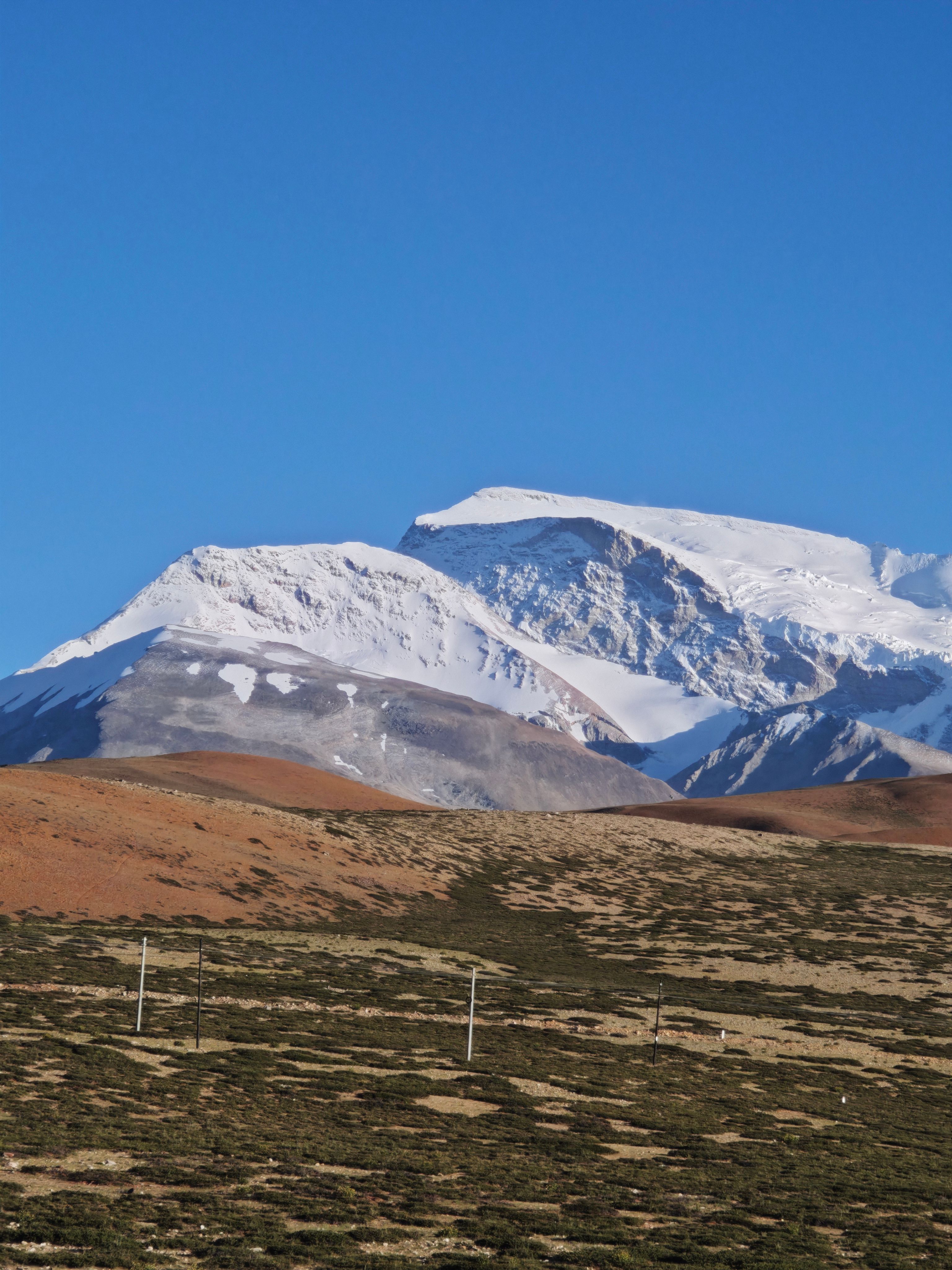
Cho Oyu Expedition
About Cho Oyu Mountain
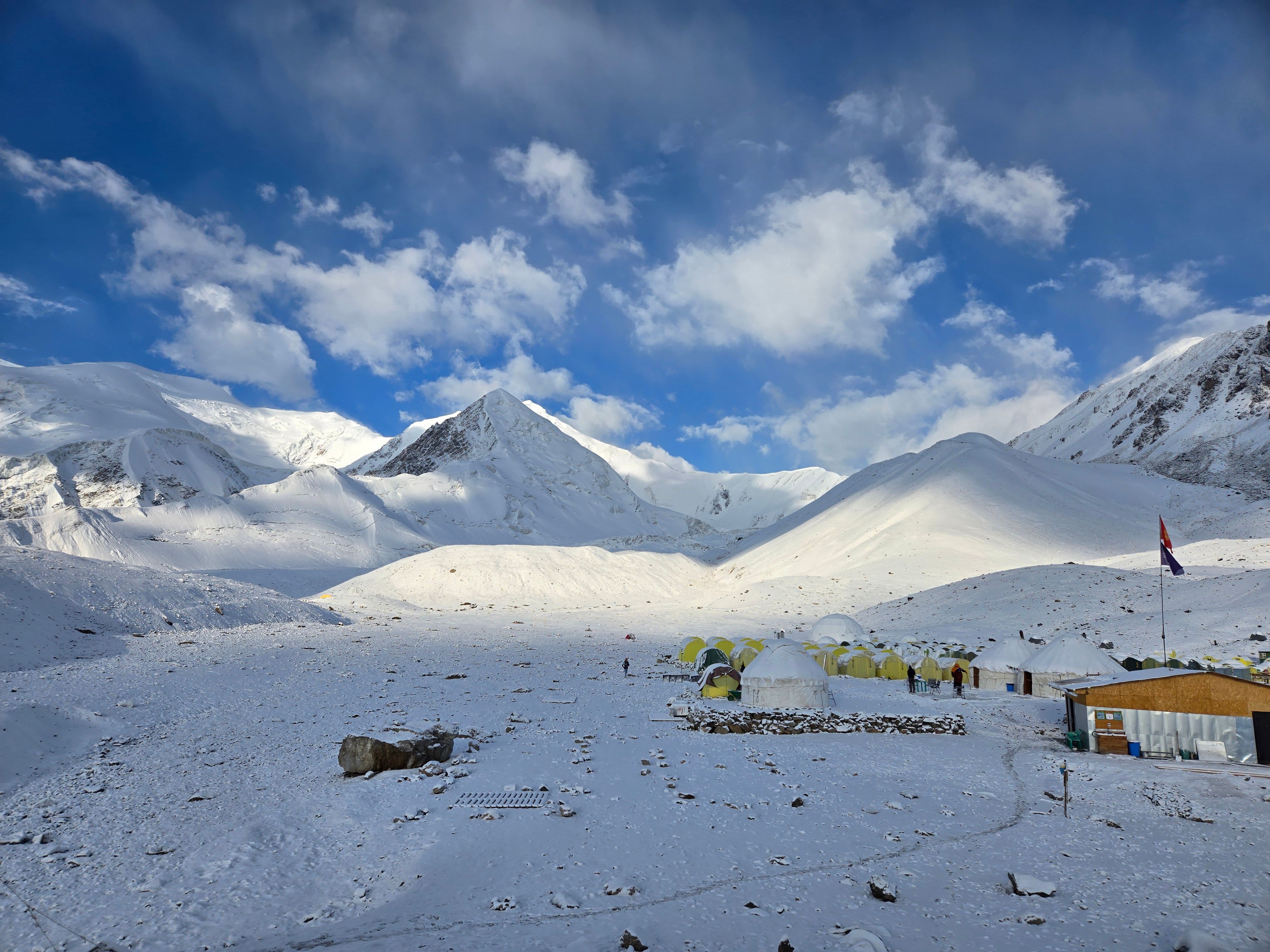
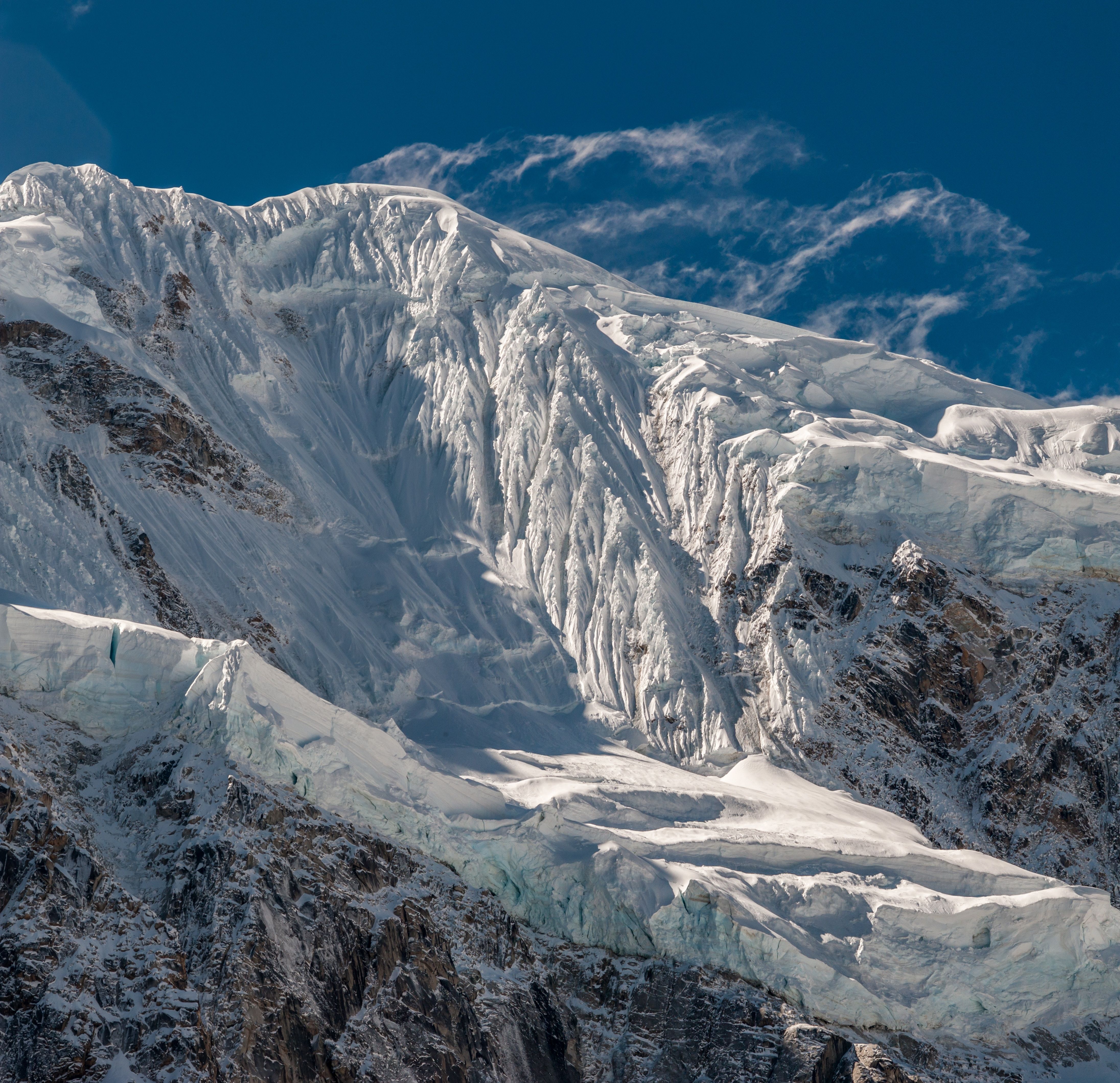
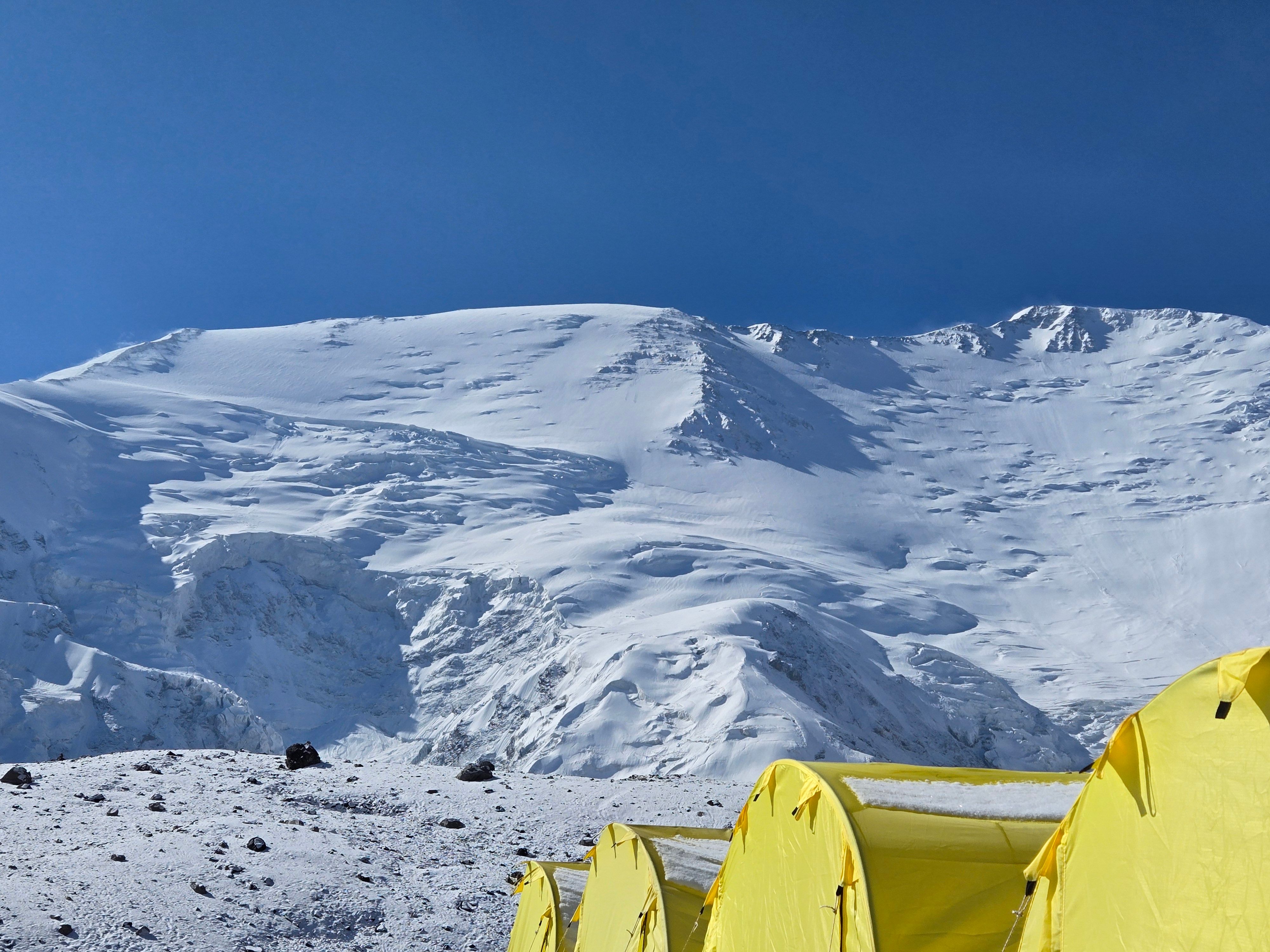
Cho Oyu, at 8,201 meters (26,906 ft), is the sixth-highest mountain on Earth and consistently regarded as the most accessible of the fourteen eight-thousanders. Located roughly 20 kilometers west of Mount Everest, its Tibetan name, meaning “Turquoise Goddess,” reflects the striking blue-green hue its faces take on in the fading light of the Tibetan Plateau.
The mountain’s first serious reconnaissance came in the early 1950s, when a British party led by Eric Shipton, which included a young Edmund Hillary, explored the peak as a potential training ground ahead of an Everest attempt. The first ascent came on October 19, 1954, when Austrian expedition leader Herbert Tichy, together with Josef Jöchler and Sherpa Pasang Dawa Lama, reached the summit via the Northwest Ridge, the same line that carries the vast majority of climbers to the top today.
Cho Oyu’s comparatively moderate terrain, straightforward logistics from the Tibetan side, and lower objective hazard have made it one of the most frequently attempted 8,000-meter peaks, with a summit success rate estimated around 45 percent among prepared expeditions. It is widely used as a training and preparation climb for Everest, Lhotse, and other more technical eight-thousanders, and remains a serious and rewarding objective in its own right for climbers ready to test themselves above 8,000 meters.
Cho Oyu Expedition
Difficulty
10/10
The standard route is less technical than Everest, K2, or Kanchenjunga, with mostly snow and glacier climbing. However, climbers still face crevasses, steep snow/ice sections, strong winds, extreme cold, avalanche risk, and prolonged exposure above 7,000 m. The greatest challenge is the extreme altitude and the Death Zone above 8,000 m, where physical and mental performance deteriorate rapidly.
Activity
Mountaineering
Climbing Cho Oyu via the Northwest Ridge is widely regarded as the most approachable line on any 8,000-meter peak, but it should never be mistaken for an easy mountain. Sections of the climb involve snow and ice slopes of 40 to 50 degrees, a short but demanding rock step known locally as the Yellow Band, and a long summit day launched from Camp III at approximately 7,470 meters, well inside the death zone. Success depends on genuine acclimatization, disciplined pacing, efficient movement on fixed lines, and the structured support our expedition team provides at every stage of the climb.
Best Season
September - October
The best season for the Cho Oyu Expedition is the autumn window from September to October, when the post-monsoon weather settles over the Tibetan Plateau and offers the most stable conditions of the year on the Northwest Ridge. This is also the season in which Cho Oyu was first climbed in 1954, and it remains the busiest and most reliable period for summit attempts. A shorter spring window in April and May is also climbable and can be arranged on request for climbers building an Everest or Lhotse preparation season.
Max Elevation
0
The maximum altitude reached during the Cho Oyu Expedition is 8,201 meters (26,906 ft), the summit of Cho Oyu and the sixth-highest point on Earth (some modern satellite surveys place the true elevation closer to 8,188 meters, though 8,201 meters remains the officially recognized figure). Above 8,000 meters climbers enter the death zone, where the body can no longer acclimatize and every hour of exposure adds physiological cost. The final summit push from Camp III demands efficient movement, sound judgment, and disciplined pacing across a broad, exposed plateau at extreme altitude.
Location
Tibet Autonomous Region
Cho Oyu rises on the Nepal-Tibet border in the Mahalangur Himalaya; roughly 20 kilometers west of Mount Everest and just north of the Nangpa La, a historic trading pass long used by Tibetan and Sherpa traders. The mountain’s name comes from the Tibetan for “Turquoise Goddess,” a reference to the blue-green glow its western face takes on at sunset when viewed from the Tibetan Plateau.
Transportation
Flight - Jeep - Trek
Transportation for the Cho Oyu Expedition is fully organized as part of the expedition logistics. The journey begins with a flight from Kathmandu to Lhasa, followed by an overland drive along the Friendship Highway through Shigatse and Tingri toward the Cho Oyu access region on the Tibetan Plateau. This combination of flight and overland travel is an important part of the acclimatization strategy as well as the expedition experience, allowing efficient movement of climbers, staff, and expedition equipment while gradually exposing the body to increasing elevation before reaching Base Camp. Yaks and porters handle load carrying from the Chinese Base Camp up to Advanced Base Camp, where wheeled or motorized transport is no longer possible
Duration
0 Days
The 41-day Cho Oyu Expedition itinerary by Himalayan Mountaineering Expedition is built around the realities of the mountain rather than commercial convenience. Arriving in Kathmandu, completing permit formalities, flying to Lhasa, and driving overland across the Tibetan Plateau to the Chinese Base Camp requires close to two weeks before the technical climbing phase even begins. Above Base Camp, the climbing and summit period spans roughly three weeks, structured around multiple acclimatization rotations through the high camps, load-carrying to stock the route, and a patient wait for a stable weather window for the final summit push.
Group Size
2 - 15
The Cho Oyu Expedition is operated with carefully managed group sizes ranging from 2 to 15 climbers to maintain efficient logistics, personalized support, and high operational standards throughout the expedition. This structure allows for better coordination during acclimatization rotations, camp movement, and summit planning while preserving the flexibility a remote 8,000-meter expedition demands. Smaller, well-managed teams support smoother communication between climbers, Sherpa guides, and Base Camp operations, which improves both decision-making and overall safety. Throughout the climbing period, team movement and summit strategy are coordinated according to weather forecasts, route conditions, and individual climber readiness.
Accommodation
Hotel - Lodge - Tent
Accommodation during the Cho Oyu Expedition is arranged according to each stage of the journey to provide comfort, recovery, and operational efficiency throughout the climb. Climbers stay in quality hotels in Kathmandu and Lhasa, comfortable guesthouses in Shigatse and Tingri, and fully equipped expedition tents at Base Camp, Advanced Base Camp, and the high camps.
Price
$0
The Cho Oyu Expedition price starts from USD 30,000 per person based on the standard fully supported expedition package operated by Himalayan Mountaineering Expedition. The package includes core expedition logistics, permits, Base Camp services, climbing support, staffing, transportation arrangements, and high-altitude operational management required for a professional ascent of Cho Oyu.
Food
B - L - D
Nutritious and carefully planned meals are provided throughout the Cho Oyu Expedition to support acclimatization, recovery, and sustained performance at high altitude. During the trek, Base Camp, and climbing phases, climbers receive breakfast, lunch, dinner, tea, coffee, and safe drinking water. Meals are prepared to maintain energy levels during long expedition days while accounting for the operational realities of cooking at altitude. In Kathmandu and Lhasa, breakfast is included, while additional meals are provided according to the selected expedition package.
Overview
Cho Oyu is the sixth-tallest mountain in the world and one of the most frequented 8,000-metre mountains among mountaineers, and it is 8,201 metres in height. It is one of the more accessible mountains in its category, and is found at the border of Nepal and Tibet. Still, being a serious expedition peak, Cho Oyu is frequently not regarded as technical as many other mountains above 8,000 metres.
This has made Cho Oyu a choice among climbers wishing to acquire the experience of climbing to extreme heights. It provides a chance to challenge the physical and mental conditions of high-altitude mountaineering following the route that is typically not as complicated as other major Himalayan peaks.
The fact that Cho Oyu is regarded as a good introduction to the 8,000-metre climbing is one of the primary reasons why climbers want to go there. Cho Oyu Expedition also enables the mountaineers to pay more attention to the altitude, endurance, and experience of the expedition, as opposed to more technical peaks. It particularly attracts people who already have some experience in the mountain, and they would like to go one step higher in their climbing experience.
Nonetheless, Cho Oyu can never be regarded as a simple mountain. Being at the highest elevation of 3,800 metres, temperatures are frozen, winds are high and the peak distance is also a big challenge. To successfully and safely go on a climbing expedition, the climbers need to be physically in shape, mentally ready and adequately acclimatised.
Cho Oyu is often chosen by climbers who are preparing for an Everest expedition. It provides mountaineers with the opportunity to test the reaction of their body in the conditions of an altitude greater than 8,000 metres and enables them to build confidence in a high-altitude state. Many of the skills learned on Cho Oyu, such as pacing, camp rotation, acclimatization, and using fixed ropes, are also important during an Everest expedition.
It is against this reason that Cho Oyu is commonly regarded as a great training ground to Everest. Educational benefits clusters can have a personal experience in death zone and know how to cope under pressure of a long trip to Himalayas. This training may be invaluable prior to trying the highest mountain in the world.
Even though Cho Oyu is frequently linked to an Everest expedition, it is an important achievement on its own. It is a tremendous feat to make it to the top of the sixth-tallest mountain in the world and it takes determination, discipline, and respect to the mountain. It is not just a warm-up climb, but a significant objective of several serious mountaineers.
There is also spectacular Himalayan view, isolated expedition mood and the unimaginable feeling of ascending to over 8,000 metres. Cho Oyu Expedition is a dream peak and a goal milestone to the profession of many climbers.
Cho Oyu is those who are already in possession of prior mountaineering experience and are willing to shift to the higher altitude expeditions. It is especially attractive for those who want their first 8,000-meter summit or who are planning a future Everest expedition. Cho Oyu may be among the most possible and the most rewarding things in Himalayas with adequate preparation, good guidance and proper training.
Cho Oyu is currently among the most revered and available 8,000 metres mountains in the world. Its location between Nepal and Tibet, less technical ascent, and strong value as preparation for an Everest expedition make it a popular choice for ambitious climbers. Cho Oyu is a high-altitude experience that is unforgettable whether treated as a first 8,000 metre mountain or a way to get to Everest.
Explore our journey on Instagram, Facebook & TikTok for photos, videos, and stories
Would you like to ask us in email info@himalayanmountaineering.com.
Itinerary
Outline Itinerary:
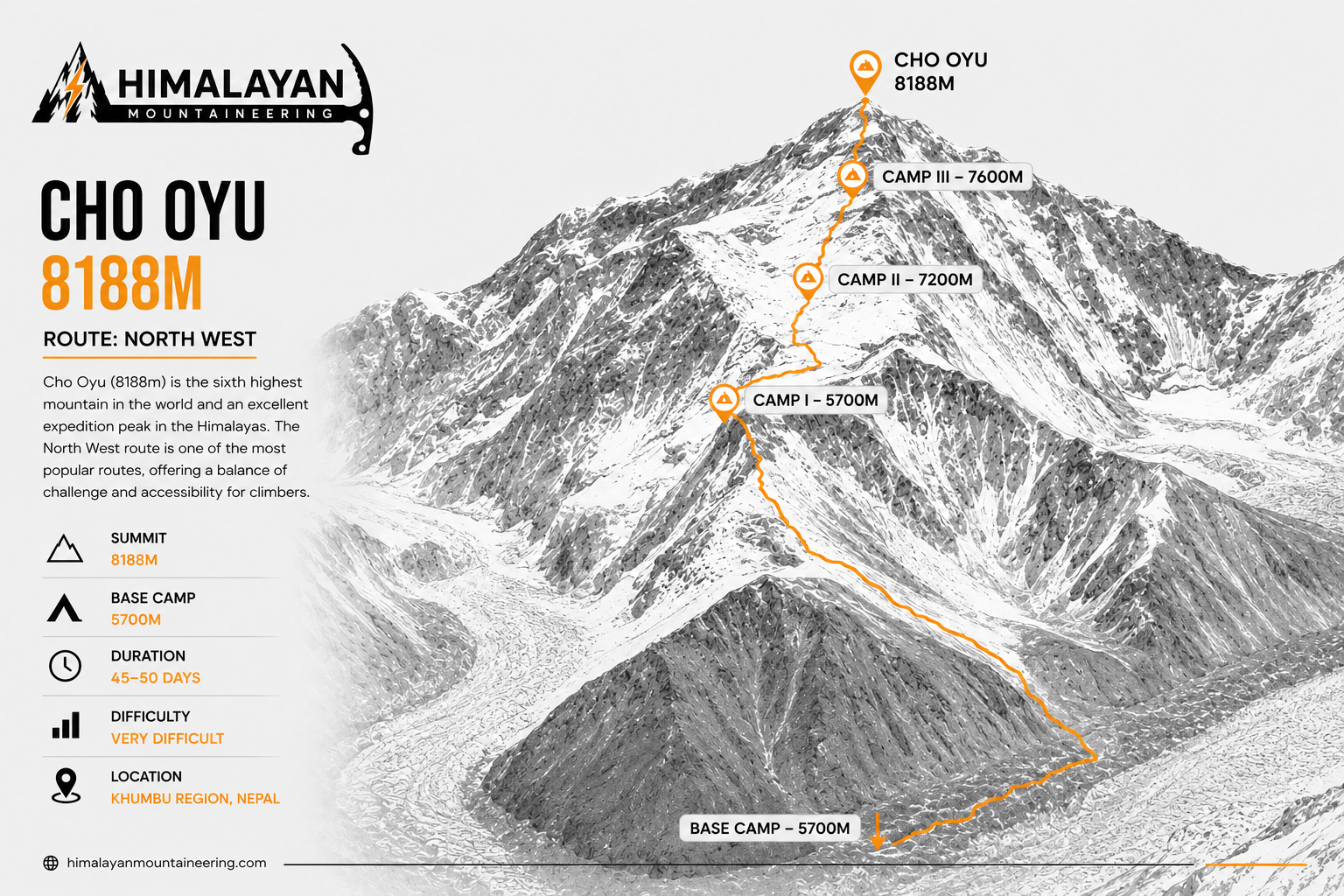
Route Map
Gear List
Clothing & Equipment Checklist:
Base Layers:
Insulation Layers:
Outer Layers:
Headgear:
Gloves:
Footwear:
Climbing Gear:
Customization:
This itinerary can be tailored to meet individual preferences and requirements. For personalized expedition planning, please contact us at info@himalayanmountaineering.com.
Emergency Note:
In case of emergencies during the expedition, necessary arrangements, including helicopter evacuations, will be made. However, the associated costs must be borne by the clients themselves. It is mandatory for all participants to have comprehensive travel and rescue insurance.
The Team
Our Cho Oyu team will be led by experienced Ningma Dorje Tamang who has a big history of climbing the big mountains with an experience of 15 years. Ningma Dorje Tamang is the Co-Founder and Director of Himalayan Mountaineering Expedition with over 15 years of mountaineering experience. He has guided and climbed major peaks including Everest, K2, Annapurna I, and Nanga Parbat. Known for his technical skills, leadership, and endurance, he is a highly respected high-altitude guide in Nepal. There will be other sherpa working under him for each members. There will also be a base camp who will take care of foods, accommodation and hygiene. There will also be team in Kathmandu who will work on weather update, helicopter arrangements and other necessary things.
Packages
Cho-Oyu Classic
$30,000
Cho-Oyu Classic
$30,000
Booking
Official Booking Confirmation is made only after 20% deposit of the total amount of the Expedition. Please contact us through email or inquiry form so that we can talk and confirm our booking.
FAQ
Cho Oyu is considered one of the less technically difficult 8,000 m peaks, but the extreme altitude, cold, wind, crevasses, and time spent in the Death Zone make it a serious expedition.
No. Climbers should already have strong mountaineering skills and preferably previous experience on 6,000–7,000 m peaks before attempting Cho Oyu.
The main climbing periods are generally spring and autumn, subject to climbing permits, route access, and local regulations.
You should be comfortable using crampons, ice axe, ascenders/jumars, fixed ropes, harness systems, and glacier-travel techniques.
No. There is no easy 8,000 m mountain. Cho Oyu may be less technical than several other 8,000ers, but altitude, weather, objective hazards, and human decision-making can still make the expedition extremely dangerous.
Gallery
Trip Inquiry
Search another peak or departure, or send your questions, preferred dates, group size, and expedition requirements — our team will get back to you.
Not sure which peak? Browse all expeditions or send us a message and we'll recommend one.